Mastering Daily Planning: A Complete Guide
Discover the art of daily planning with practical strategies to organize your tasks, manage energy, and achieve your goals consistently.
Open Sunsama Team · · Updated · 7 min read
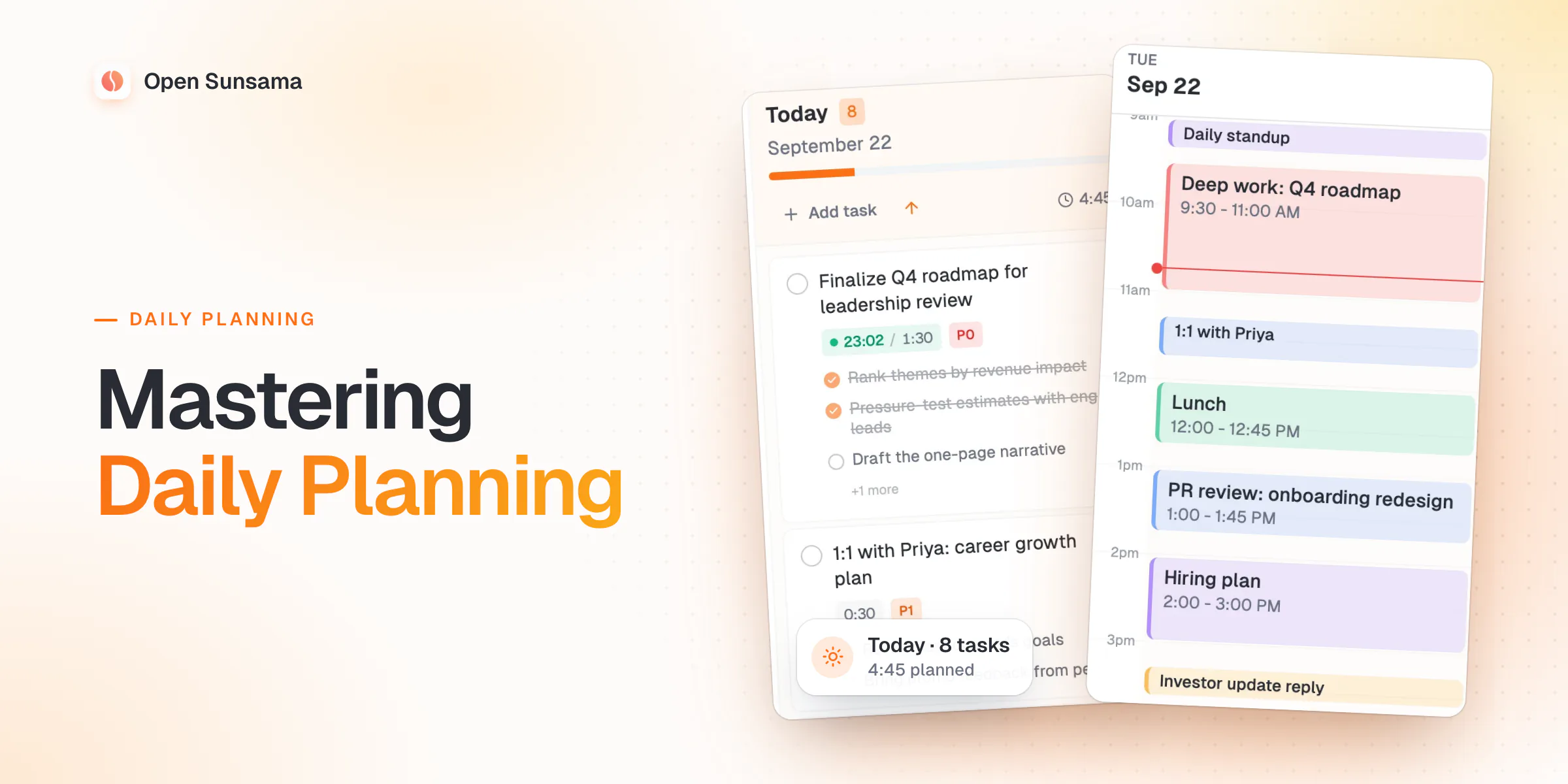
Daily planning is the cornerstone of productivity. It's not about cramming more into your day—it's about being intentional with the time you have. For a deeper dive, check out our complete daily planning guide.
The Philosophy of Daily Planning
Most productivity advice focuses on doing more. But true productivity is about doing the right things. Daily planning helps you:
- Clarify priorities: What actually matters today?
- Manage energy: When are you at your best?
- Create boundaries: What can wait until tomorrow?
The Ideal Daily Planning Routine
Morning Review (5-10 minutes)
Start each day with a brief planning session:
- Review your calendar: What meetings and commitments do you have?
- Check your task list: What's urgent? What's important?
- Set intentions: Choose 1-3 "must do" tasks for the day
- Time block: Assign specific times to your priorities
Evening Shutdown (5 minutes)
End each day with a quick review:
- Celebrate wins: What did you accomplish?
- Note incomplete items: What needs to carry over?
- Prep for tomorrow: Any early morning tasks to prepare for?
- Clear your mind: Write down any lingering thoughts
The Power of Constraints
Counterintuitively, constraints make planning easier:
The 3-Task Rule
Choose no more than 3 "must do" tasks each day—these are your daily goals. If you accomplish those three things, your day was successful—everything else is bonus.
Energy Mapping
Not all hours are created equal. Map your energy patterns:
- Peak hours: Save for creative or challenging work
- Trough hours: Handle administrative tasks
- Recovery hours: Take breaks, go for walks
Calendar Boundaries
Use time blocking to block time for:
- Deep work (no meetings allowed)
- Shallow work (email, admin)
- Personal time (lunch, exercise)
Common Daily Planning Pitfalls
Planning Too Much
Your day will never go exactly as planned. Leave margin for the unexpected. A 70% planned day gives you flexibility.
Ignoring Energy Levels
Scheduling your hardest work when you're tired is a recipe for frustration. Know your rhythms and plan accordingly.
Not Planning at All
"I'll figure it out as I go" sounds flexible but often leads to reactive, unfocused days. Even a rough plan beats no plan.
Tools for Daily Planning
The best planning tool is one you'll actually use. Options include:
- Paper planners: Simple, tactile, no distractions
- Digital calendars: Shareable, searchable, adjustable
- Hybrid approaches: Paper for planning, digital for scheduling
Open Sunsama combines the best of both worlds—a visual, intuitive interface that feels as natural as pen and paper, but with the power of digital tools. The kanban board makes task management intuitive.
Building the Habit
Daily planning works best as a habit. Tips for making it stick:
- Same time, same place: Create a ritual
- Start small: Even 2 minutes of planning helps
- Stack it: Attach planning to an existing habit (coffee, commute)
- Be patient: Habits take 2-3 months to solidify
Ready to transform your daily planning? Get started with Open Sunsama and discover a better way to organize your day.