What is a Routine? Definition, Types, and Why Routines Matter
A routine is a set of actions you repeat in a regular order. See how routines differ from habits, with daily examples and steps to build your own.
Open Sunsama Team · · Updated · 7 min read
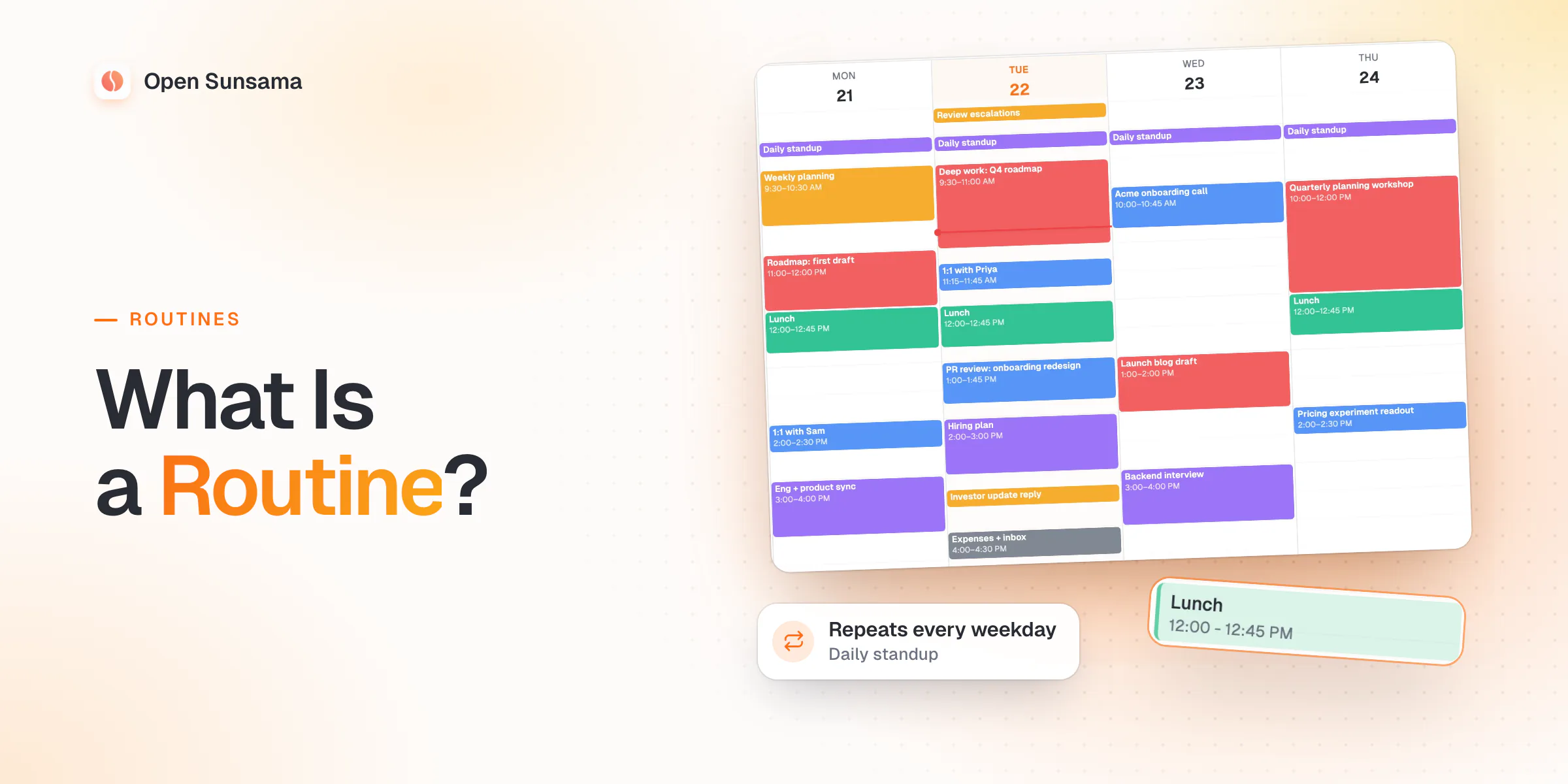
A routine is a set of actions you repeat in a regular order or situation. A daily routine might be to check your calendar, choose three tasks, then start the first one. It gives a familiar shape to part of your day.
You can follow a routine on purpose. It does not have to be strict, automatic, or tied to an early start.
Key takeaways
- A routine is a repeated sequence, such as getting ready for work.
- A habit is a response that becomes more automatic in a familiar setting.
- Start with a short sequence tied to something that already happens.
- Plan a shorter version for busy days, then adjust what does not fit.
The Definition of a Routine
In daily life, a routine is a usual way of doing things. The Cambridge Dictionary definition centers on a usual or fixed way of doing things.
A routine can follow a time, a place, or an event. You might plan each morning at nine, or plan after you open your laptop. Both give you a clear point at which to begin.
The steps should serve a purpose you can name. For a work routine, that could be knowing what to do first. For an evening routine, it could be leaving a clear plan for tomorrow.
You do not need to copy someone else's full day. Choose the part of your day where a repeated sequence would remove a real problem.
Routine vs. Habit vs. Ritual: Understanding the Differences
These words overlap in everyday speech. The useful distinction is between a sequence you follow, an automatic response, and an act with personal meaning.
| Term | What it means here | Example |
|---|---|---|
| Routine | A repeated sequence of actions | Check meetings, choose tasks, block work time |
| Habit | A learned response in a familiar setting | Open your calendar when you sit at your desk |
| Ritual | An action or sequence with personal meaning | Close your notebook to mark the end of work |
A routine can include habits. A closing ritual can also be part of an evening routine. These are ways to describe your day, rather than rules about how you must live.
Wood and Neal's review of habits explains how responses become linked to familiar contexts. It does not imply that a whole daily schedule becomes automatic at once.
If you need a reminder or a written checklist, your routine still counts. The goal is a useful sequence, rather than doing every step without thought.
Types of Routines
A daily routine can cover a few minutes or a larger part of your day. Start with the type that addresses a recurring point of friction.
Morning Routines
A morning routine helps you begin the day. It might include breakfast, checking your calendar, and preparing what you need for work.
Keep the planning part short. Check your fixed commitments before choosing tasks, so your plan fits the time you have.
Work Routines
A work routine helps you move from deciding to doing. For example, check meetings, choose a task, reserve time, then close unrelated tabs.
If meetings change, move the work block. Keeping a sequence does not mean keeping the same clock time every day.
Evening Routines
An evening routine gives the day a clear stopping point. Review unfinished work, choose where it belongs, and leave a note about the next step.
You do not need to finish every task before stopping. A clear place to return can be enough.
Weekly Routines
A weekly routine helps with choices that do not need daily attention. Review next week's commitments and decide which larger tasks need protected time.
Keep this separate from your daily task check. You should not have to rethink the whole week each morning.
The Science of Routines: What Research Can Tell You
Research on habits can inform how you build a routine. It does not prove that one morning schedule will make everyone more productive.
Lally and colleagues studied habit formation in daily life. People repeated a chosen behavior in a consistent context, and the time to reach automaticity varied widely.
The often-quoted 66 days comes from that work. It is not a deadline for learning a complex routine or a promise that every action will become automatic.
A second useful idea is an if-then plan. In Gollwitzer's work on implementation intentions, a plan links a situation to an action.
For daily planning, link opening your laptop to checking today's calendar. This gives you a cue and a clear next step.
These studies support specific ideas about repeated behavior and planning. They do not justify the broad health claims made in many routine guides.
Benefits of Having Routines
A useful routine gives you a starting point. Instead of inventing a plan each morning, you have a short set of steps to follow.
It also makes omissions easier to spot. A shutdown checklist can remind you to move unfinished work or write down a deadline.
For work, the benefit should be visible in your own day. You might start the first task sooner or spend less time choosing between tasks.
Treat those as things to observe. If a routine takes more effort than it saves, shorten it or change it.
How to Build a Routine That Sticks
1. Choose One Problem
Start with a specific moment, such as sitting down to work without knowing what comes first. Avoid redesigning your whole day at once.
Write down what a better start would look like. “Choose a first task before opening messages” gives you something concrete to try.
2. Pick a Clear Starting Cue
Choose something that already happens, such as arriving at your desk or finishing breakfast. Use that event to begin the sequence.
For example: “After breakfast, I check my calendar and choose today's first task.” Keep the cue easy to notice.
3. Write Two or Three Steps
Make each step an action you can complete. “Be productive” is too vague; “reserve 30 minutes for the draft” tells you what to do.
A simple work routine could be:
- Check today's meetings and fixed commitments.
- Choose one task that fits the remaining time.
- Put a block for that task on the calendar.
Our guide to planning your day shows how to turn those choices into a realistic schedule.
4. Make the Plan Fit Your Calendar
A task list says what you hope to do. A calendar shows when you have room to do it.
Give the first task a place in your day. Leave space for breaks, changes, and work that takes longer than expected.
5. Set a Shorter Fallback
Decide what you will do when the full routine does not fit. On a busy morning, that might be checking meetings and choosing only one task.
This keeps the routine useful when your day changes. You can return to the full version when you have room.
6. Review What Actually Happened
At the end of the day, ask which step helped and which got skipped. Look for a practical reason before adding more reminders.
If the sequence is too long, remove a step. If the cue is easy to miss, choose a clearer one.
A Daily Routine Example for a Workday
This is an example you can adapt. It is not a measured result or a schedule that everyone should follow.
| Moment | Action | Purpose |
|---|---|---|
| Start work | Check meetings and choose a first task | Make the day realistic |
| Before focused work | Reserve time and close unrelated tabs | Make the next action clear |
| After lunch | Check what changed and move blocks if needed | Keep the plan current |
| End work | Review unfinished tasks and note the next step | Leave a clear place to return |
You can follow this on paper or in a calendar. An app helps when tasks recur or plans change often.
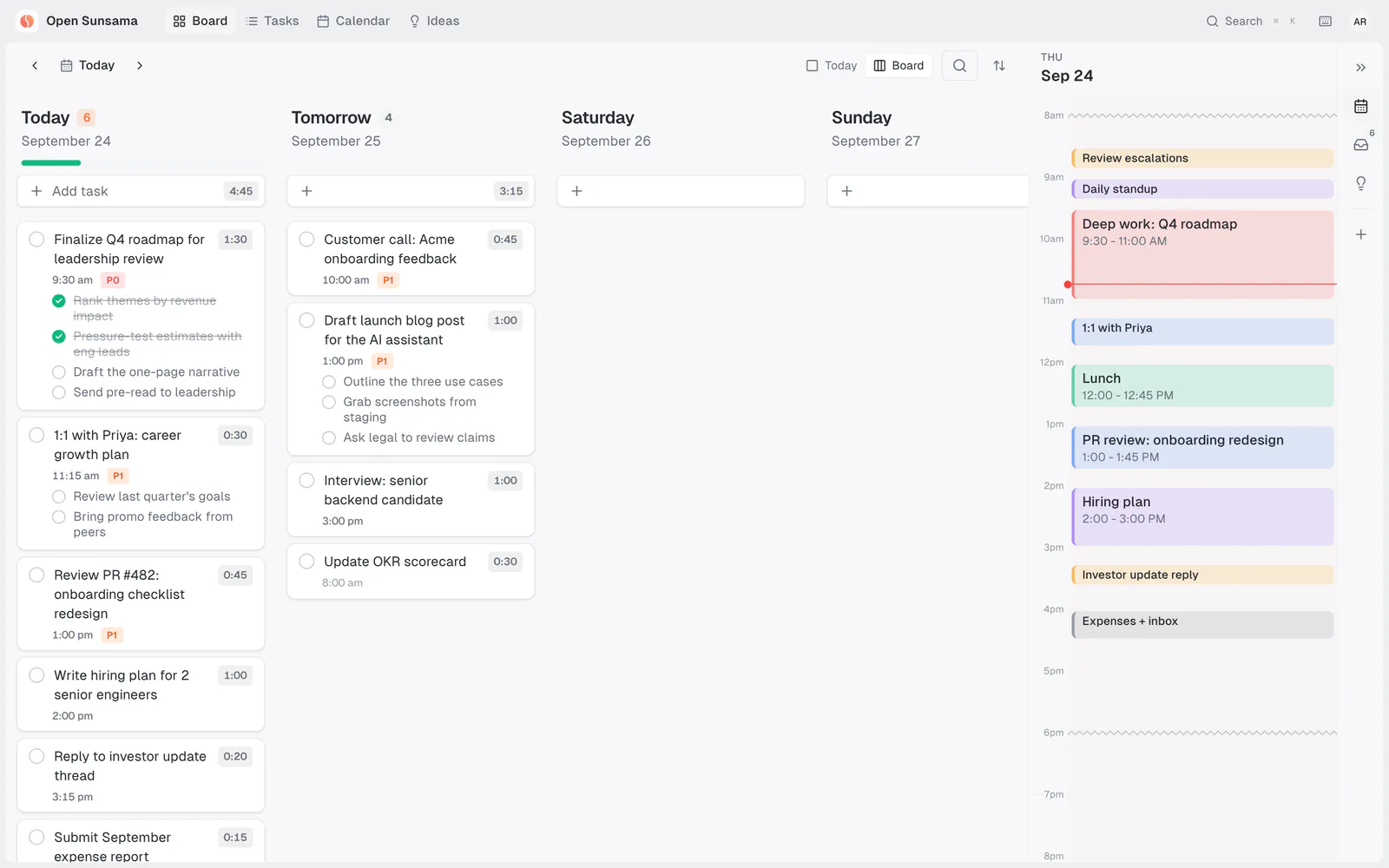
We build Open Sunsama and use it for daily planning. It combines recurring tasks, time blocking, and a focus timer, so the plan and the work stay together.
If you want help from an AI assistant, connect it over MCP. Your agent can read your plan and place task blocks around meetings.
Open Sunsama's code is public under a non-commercial license. Personal self-hosting is allowed; companies need a commercial license. Read the self-hosting guide before choosing how to run it.
To try the workday example, start with the time blocking guide. Choose one task and give it a place in today's schedule.
Frequently asked questions
What is a routine in simple terms?
A routine is a set of actions you repeat in a regular order or situation. Checking your calendar, choosing a task, and starting work is a routine.
What is the difference between a routine and a habit?
A routine is a repeated sequence that you may follow on purpose. A habit is a response that has become more automatic in a familiar setting. A routine can include habits.
What is an example of a daily routine?
A workday routine might be to check your calendar, choose three tasks, and reserve time for the first one. At day's end, review unfinished work and choose when to return to it.
How long does it take to build a routine?
There is no fixed timeline. Habit research studies individual behaviors, so it cannot give a deadline for an entire routine. Start with a small sequence and adjust it as you learn what fits.
Can routines be flexible?
Yes. Keep the steps that help and change their timing when your day changes. A shorter fallback version can help on busy days.
Do I need an app to build a routine?
No. Paper or a calendar can work. Open Sunsama helps if you want recurring tasks, time blocks, and a daily plan together. We build Open Sunsama and use it for our own planning.